Showing posts with label NFL. Show all posts

Wednesday, 15 May 2013

Measuring the Intangibles: Brains Over Brawn


When it comes to measuring an athlete’s skills there are a lot of things we use to evaluate them. Things like size, strength, speed, endurance, ball skills and more depending on the sport itself. There is also something we hear about called ‘intangibles’, which is something some athletes have and some don’t. ‘Intangibles’ includes several things like personality, leadership, brains, decision making, attitude, heart, effort and all those attributes that can be harder to quantify and thus they are not tangible.

To create a successful sporting team you don’t need every single player to have those intangible qualities, but you definitely need a core of them. Culture is so important in sporting teams and the ones that create success for sustainable periods are those with an inbuilt culture of success.

Now obviously we can’t measure every aspect of the intangibles but we certainly can try measure elements of it. If I were running a sports team and able to choose the players we sign (and hopefully one day I will be), I would implement a system to make sure I was bringing in players not only of high character, but also of high intelligence, decision making in limited time and logic/reasoning ability.

Quite simply, I would make all players take an aptitude test. Some players would probably hate it and to be honest it might rule out certain players who shouldn’t be ruled out. But overall, I think I’d be doing pretty well on average if I was signing primarily players who scored highly on an aptitude test.

In the salary cap world, the actual talent of the players across most teams is relatively even. Yes there are outliers at the top and the bottom, but by and large most teams have a few stars surrounded by a bunch of role players with enough talent to be playing in the league. What separates the good teams from the bad are things like decision making in important moments, playing and sticking to the team plan and structures as well as some luck with injuries and the bounce of the ball.

The Melbourne Storm aren’t just built around three of the most talented players in the league, they are built around three of the smartest. The same can be said for the San Antonio Spurs, a team that has been in the title picture without fail since 1998. The Storm and the Spurs have a lot of similarities. They both are built around a coach and system that ties in perfectly with their star players and then smartly surrounded by underappreciated role players. These role players are crucial because they need to completely understand not only their role, but everyone on the team’s role. If one guy gets hurt, they are easily replaced because everyone buys into the system and understands it.

It sounds simple and easy, but if it were, everyone would be doing it successfully.

Up until they reach the professional level, a lot of athletes have relied purely on their natural talent levels. But at the professional level everyone else has that talent level too.  This is why we see guys with immense talent become ‘busts’ and never reach their potential at the pro level.

For this reason, if I was comparing an athlete with A level talent but a C level brain to an athlete with B level talent but an A level brain, I’d likely take the B level talent. I want to know I can maximise the talent of the player and get the consistency that comes with someone who will fit in to what the coach is trying to accomplish.

To evaluate this, I would likely look to implement the Wonderlic Test used for players entering the NFL Draft. The Wonderlic is a multiple choice test of 50 questions to be answered in 12 minutes or less. A score of 20 indicates average intelligence and 10 points is required to at least be considered literate.

It is considered important in the NFL primarily for positions with the most decision making, namely quarterback and the offensive linemen who protect him. It may surprise you, but those monsters protecting the quarterback are usually the smartest guys on the field and average the highest scores in the Wonderlic. This is because to be good as an offensive lineman, you need to process a lot of information very quickly and make the right decision, or else your pretty boy star quarterback will end up getting smashed. It is a high pressure job and requires brains, not just brawn. For reference, the average score for a quarterback is 24 and an offensive lineman is 26.

In rugby league for example, obviously the positions that would need to score the highest would be the ‘spine’ of the fullback, five-eighth, halfback and hooker. They are the playmakers and decision makers pulling the strings and implementing the coach’s system.

Without naming names, there are many players I have never rated or felt like were overrated because I felt like they didn’t have these qualities to lead their team. They had natural ability, but that doesn’t get you as far at the elite level. These are the players that lead fans to look at each other in shock when the player makes the worst decision at the worst time as opposed to someone maybe less talented, but does the smart thing and keeps his head and composure.

Cameron Smith looks like he should be doing your taxes and yet he is one of the greatest footy players of all time because he is like a coach on the field. Darren Lockyer was the same way and believe it or not larrikins like Andrew Johns and Brad Fittler were genius decision makers, not just talents, when it came to football. I bet they would score higher on the Wonderlic than some would imagine.

Look at a guy like Jeff Robson at the Cronulla Sharks. He would barely have enough natural talent to be in the NRL and yet he has become the glue of that team and Todd Carney absolutely needs Robson next to him to harness his own abilities. Fans of other teams and even some Sharks fans may wonder why they stick with Robson, but I’m sure Shane Flanagan trusts no one more than their number 7.

Obviously teams need some X-Factor type players and you don’t need an entire team of brain surgeons to win. But you need brains where it matters and you certainly do not want the lunatics running the asylum.

I think it would be fascinating if the AFL implemented the Wonderlic prior to the draft the same way the NFL does. I wonder how much it would accurately predict success at AFL level and whether teams would value it as highly as I do.

Also teams struggling and in need of a rebuild, like the Wests Tigers or Melbourne Demons, could implement the test to their own players and potential recruits, looking to use a different edge to get back to challenging for the NRL premiership. They already evaluate other factors; the brain should be in there too.

Getting a bunch of big, strong, fast guys will get you so far, but you need to make sure you have enough smart guys pointing them in the right direction. If the big, strong, fast guys also double as the smart guys, then that’s even better and how you end up with LeBron James or Greg Inglis.

Sometimes the best ideas are to steal other people’s ideas and implement them where they aren’t being used. The NFL has a good idea and it’s time we look to steal it.

Wednesday, 30 January 2013

If a Tree Falls in the Forest


Ray Lewis of the Baltimore Ravens


Today a story came out about Ray Lewis, the retiring NFL superstar about to end his career in the Super Bowl, where he is accused of purchasing performance enhancing drugs. The story isn’t actually new though. Two years ago the same man, Mitch Ross, said he sold PEDs to Lewis previously. Lewis has once again the denied the allegations and within a few days this story will blow over most likely.

Obviously I have no idea if this Ross character is telling the truth or just trying to get fame, publicity, money or whatever else he can by lying. Ray Lewis has never failed a drug test so for now we assume he is innocent.

However the problem here isn’t the accusations or even whether Lewis did it or not, but rather the fact that the NFL has a long list of banned substances, including the one Lewis is alleged to have used (deer antler spray… seriously), but then doesn’t even test for most of them.

Basically the league is operating on the “honour system” for many of the substances that can be as helpful as the ones they do test for such as steroids and HGH. It has long been known that PED use is rampant in the NFL, much like it was in baseball, but that not only do they not do much to catch the users, but it seems fans truly don’t mind.

There is a prevailing theory that the attitude of NFL fans is that they know many players use PEDs, but given the nature of the sport, they are fine with it. There are a lot of skeletons in the NFL closet, such as the Bounty-gate scandal and thus PED usage doesn’t really get much attention or interest.

If Ray Lewis is using the deer antler spray he is accused of purchasing, you can see why he would have done it.

The guy wanted to come back in time to play again this season, which was always likely to be his last. He had an opportunity to use something to make that happen that he cannot actually get in trouble for and he knows for a fact that lots of other players are using it too.

As humans we are always influenced by the culture we are surrounded by. That’s how a lot of well-meaning cyclists end up on EPO even if they had always been anti-PED previously. That doesn’t mean what they are doing is right and shouldn’t be punished, but it’s how these things become epidemics.

The NFL doesn’t seem to want to catch people using these PEDs, so of course the players are going to take them in such a physically demanding sport with one of the shortest average career lengths around.

What use is a rule if it’s never going to be enforced?

Lance Armstrong admitted one of the main ways he got away with doping was simply that they weren’t testing for what he was doing for much of that time. Sure, by nature the cheaters will always be one step ahead of the testers, but they can still make it a lot harder to do. There are tests that exist to test everything, or almost everything, banned by the NFL.

Having the rule but not enforcing it is purely a publicity stunt to make it seem like they are running, or at least endeavour to run, a clean sport. But while the testing stays as it is, it shows that the NFL have no real interest in opening the can of worms that surely awaits them were they to crack down on PEDs.

With everything going on surrounding the concussion issue in football, the last thing Roger Goodell needs is another scandal about the safety and integrity of the league he runs. So this story about Ray Lewis is something for talking heads to go on about for a couple of days and then forget all about the fact that underlying it is a much bigger issue.

Even if Ray Lewis had tested positive, the suspension would only have been four games for a first offence. Compare that to sports where you can be wiped out for entire seasons, multiple years or even lifetime bans.

Perhaps one day, once there is nothing ahead of it on the to-do list, the NFL will actually take drug testing seriously. But in the meantime, you are kidding yourself if you think half the players in the league aren’t abusing the rules in one way or another.

I love American football and am very excited to watch the Super Bowl this weekend (Monday our time). In fact I am hoping Ray Lewis goes out on top. However I am not naïve enough to believe I will be watching a sport where the athletes are clean, just like when I watched Le Tour during the height of the doping years.

When a tree falls in the forest, I hope someone will show up to drug test the lumberjack.

Wednesday, 23 January 2013

Contextual Heroes


Armstrong during his interview with Oprah

A few days ago a friend who is not a huge sports fan asked me a question, which was perfectly legitimate, even though most of us took it for granted.

She asked me why was Lance Armstrong was such a big deal when it is generally accepted that everyone else was cheating too?

The question was not asked in defence of Lance, but rather wanting to know why he was the one being so heavily scrutinised compared to others. For example, Alberto Contador may not have won seven Tours, but he did win an impressive three before being suspended and having one of his victories stripped.

The answer in one word is: context

So much of sport nowadays, especially with the “24 hour media cycle” as it’s called, is about contextualising the actual sporting events and achievements. Two players may put up the exact same stats and win the exact same number of games and yet those two athletes could be viewed in very different ways depending on the stories around them.

Lance Armstrong deserves what he is getting now for the way he acted during and after the actual cheating. I don’t need to rehash all the despicable things he said and did as I’m sure you’ve all seen enough of it now. But the point is that if he dealt with the accusations and everything else the way some other cheaters did, perhaps he could have avoided so much of the damage now done.

David Millar was never Lance Armstrong and never won a Tour. He also never started a major charity or became one of the most recognisable athletes on Earth. Therefore perhaps it was a lot easier for Millar to be honest and open about cheating when he was caught many years ago, but Millar was not only forgiven by the cycling community, he is actually one of the most respected guys on the circuit and now a big advocate for cleaning up the sport.

Both Millar and Armstrong cheated in the same way in the same events. In that regard one isn’t really worse than the other outside of the fact that one of them won. But the way they dealt with the situation was so different that the results are also vastly different.

Manti Te’o is not only an absolutely bizarre and fascinating story; he is also a huge example of how context shapes our views on athletes outside of their athletic endeavours.  People seem angry and upset over the fake girlfriend scandal even though it has nothing to do with him or even how he played. But the reason it is such a big deal is that people form opinions on sports based around the stories surrounding them. Manti Te’o wasn’t only famous because he was one of the best players in College Football and at the most famous College Football school, but because he famously overcame the deaths of his grandmother and girlfriend in the same week.

Finding out that the basis for their opinion was false makes people question their own judgement, even if they had no reason not to believe the story when they heard it in the first instance. Discovering you believed a lie is something that hits home for everybody, whether it’s in their personal life or even about a football player they watch on TV. That’s why I believe people are so up in arms about this, especially when this particular lie (or at least embellishment) was used to bring spotlight to the athlete in question.

However in some instances we overlook off field issues. Ray Lewis is about to end his NFL career in the Super Bowl and is one of the most respected and beloved NFL players of his generation.  But it was only a decade or so ago that Lewis was on trial for murder and admitted lying to police to help his friends, who were later acquitted as well. Lewis pleaded guilty to obstruction of justice, but nowadays the story only seems to even be referenced via Twitter jokes and completely ignored for the most part.

So why does Lewis and many other athletes get a pass where others don’t?

It comes down to how well an athlete is able to handle the situation after the fact. Whether that involves great PR and damage control people or just being honest about the situation, most of the time the public are willing to give second chances if they think the athlete shows they deserve one.

Another factor, as much as it probably shouldn’t matter, is how well the athlete performs after the scandal. Ray Lewis continued to be a great player for many years whereas Lance Armstrong is already retired. Michael Vick had one superb season when he returned from his dog fighting scandal and some people looked past that and focussed on what he was going on the field again.

In Australia, Shane Warne was always getting himself into trouble, even if never anything as serious as mentioned above. But he was still Shane Warne and no matter what went on in his life, he was always our hero when he had a cricket ball in his hand.

Bernard Tomic is going through this now. There was always talk about him being a spoilt brat, but until we read about the trouble he was getting in and the petulant comments he made, many fans focused on the fact that he could be the next great Aussie tennis player. However as his play went downhill and his off court antics got worse, he finally had to deal with the damage to his reputation.

So far in 2013 his play has improved dramatically. That alone will go a long way to helping his reputation, simply because people love winners, but if his tennis doesn’t live up to his antics watch how quickly we turn on him.

Sport is a bizarre world. When it suits us we like to only care about what happens on the field, as evidenced by how we can forgive athletes as long as they perform. However, we are also quick to jump down their throats when they let us down or lie to us. At the end of the day, we don’t know these people personally and can only judge them on their words and actions. In normal life, we care about things like how nice someone is to us and how they treat those we care about. When it comes to athletes and other public figures, we don’t have that luxury so all we are left with is trial by media.

Lance Armstrong seems like a pretty deplorable person. I’m sure he loves his kids and all that stuff, but he has never seemed likable and I don’t think it’s rash to judge him based on what we know. However, we should never stop asking ourselves why some people get scrutiny over others and whether it is always deserved.

Monday, 3 December 2012

Safety Hurts


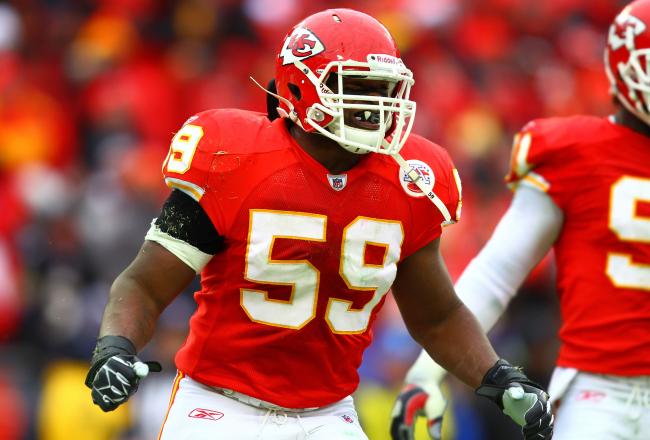
Jovan Belcher playing for the Chiefs

By now I imagine many of you, sports fans or not, have read about Kansas City Chiefs linebacker Jovan Belcher murdering his girlfriend and mother of his child and then driving to his team’s practice facility, before shooting himself in front of his coach and general manager. I cannot pretend to know why he did this and whether or not there was some sort of medical cause, but what I do know is that questions are being asked about whether or not he may have been suffering from any concussion related mental issues.

I am sure we will learn more once an autopsy is performed, but the fact that the question surrounding concussions is being asked legitimately proves in-and-of-itself that any time something bad happens to a current or former player, the question of brain damage is going to come up and deservedly so. We have enough evidence already about the impact concussions have and we also have enough evidence about just how common they are in American football at all levels of the game.

At the same time, the NRL here in Australia has banned the shoulder charge, which when performed correctly makes no contact with the head, however due to how often it goes wrong and head contact is made, the league has acted on it. The response has been near unanimous in disapproval. However, one must wonder if it’s situations like what is happening in the USA that is the actual cause behind the decision taken to ban the shoulder charge. Clearly everyone agrees now that concussions are probably the most serious regular injury suffered in contact sport, but we don’t like when rules are changed based on that fact.

The problem with the rule change though is that there simply isn’t a history in rugby league of brain damage as there is in gridiron. The cases of depression, memory loss, suicide and other problems regularly facing retired NFL players simply isn’t happening here to the same level. Four Corners on the ABC had a story on the impact concussions are having in Australian sport, so clearly there is a precedent for it here too; however it really seems to occur en masse in the USA. Yes we want to cut out concussions, but there isn’t evidence to suggest the shoulder charge specifically is a massive problem causing serious long term issues. After all, most of the research suggests the high impact, memorable concussion incidents that we usually think of aren’t actually the ones causing all the problems, but rather it’s the small, more regular impacts occurring between American football linemen that is the bigger issue.

Now some people may wonder why head injuries are so much more prevalent in the American game where players wear so much padding and helmets and of course are involved in so many fewer plays across the course of a game. Shouldn’t games like rugby or rugby league, which seems so barbaric to many in the USA, be dealing with as many if not more of these problems?

But the answer is no and I think I know why.

It’s the helmets themselves. American football players feel protected due to their padding and helmets and are trained to use them as weapons. Obviously recent rule changes are trying to crack down on this, but it still happens all the time and the players are killing themselves by doing it. It’s counter-intuitive.

I genuinely believe that if you had American football played without the pads and with only rugby headgear or even the old leather helmets the NFL players wore 100 years ago, you would see a drastic change instantly. Yes it would change the game itself quite a lot. Player’s instincts are currently a certain way and they would have to very quickly have to adjust, but I think it would happen a lot quicker than it is right now, where they change the rules to punish guys for doing what they have been taught to do since childhood.

I would love to see a one-off game of American football played in this manner. I can’t imagine it ever happening and if anything I feel like they will bring in more protection with new and improved technology. But honestly, they might just be doing more harm than good.

What is certain is that the game is changing and will continue to change as they try and solve this problem. The question really is though, what is causing the problem?